
by Alice Miller
The Roots of Violence are NOT Unknown
The misled brain and the banned emotions
The Facts:
1. The development of the human brain is use-dependent. The brain develops its structure in the first four years of life, depending on the experiences the environment offers the child. The brain of a child who has mostly loving experiences will develop differently from the brain of a child who has been treated cruelly.
2. Almost all children on our planet are beaten in the first years of their lives. They learn from the start violence, and this lesson is wired into their developing brains. No child is ever born violent. Violence is NOT genetic, it exists because beaten children use, in their adult lives, the lesson that their brains have learned.
3. As beaten children are not allowed to defend themselves, they must suppress their anger and rage against their parents who have humiliated them, killed their inborn empathy, and insulted their dignity. They will take out this rage later, as adults, on scapegoats, mostly on their own children. Deprived of empathy, some of them will direct their anger against themselves (in eating disorders, drug addiction, depression etc.), or against other adults (in wars, terrorism, delinquency etc.)
Questions and Answers:
Q: Parents beat their children without a second thought, to make them obedient. Nobody, except a very small minority, protests against this dangerous habit. Why is the logical sequence (from being a misled victim to becoming a misleading perpetrator) totally ignored world-wide? Why have even the Popes, responsible for the moral behaviour of many millions of believers, until now never informed them that beating children is a crime?
A: Because almost ALL of us were beaten, and we had to learn very early that these cruel acts were normal, harmless, and even good for us. Nobody ever told us that they were crimes against humanity. The wrong, immoral, and absurd lesson was wired into our developing brains, and this explains the emotional blindness governing our world.
Q: Can we free ourselves from the emotional blindness we developed in childhood?
A: We can – at least to some degree – liberate ourselves from this blindness by daring to feel our repressed emotions, including our fear and forbidden rage against our parents who had often scared us to death for periods of many years, which should have been the most beautiful years of our lives. We can’t retrieve those years. But thanks to facing our truth we can transform ourselves from the children who still live in us full of fear and denial into responsible, well informed adults who regained their empathy, so early stolen from them. By becoming feeling persons we can no longer deny that beating children is a criminal act that should be forbidden on the whole planet.
Conclusion:
Caring for the emotional needs of our children means more than giving them a happy childhood. It means to enable the brains of the future adults to function in a healthy, rational way, free from perversion and madness. Being forced to learn in childhood that hitting children is a blessing for them is a most absurd, confusing lesson, one with the most dangerous consequences: This lesson as such, together with being cut off from the true emotions, creates the roots of violence.
www.alice-miller.com
© 2015 Alice Miller
- The Roots of Violence are NOT Unknown
- Alice Miller defines Child Mistreatment, Child Abuse
- Profile of Alice Miller
- How is Emotional Blindness Created ?
- The Roots of Violence
- Spanking is counterproductive and dangerous
- Manifesto
The flyer can be used for distribution free of charge
home
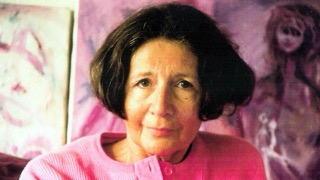
I decided to launch this website because only a small minority of people are aware of the very negative consequences of corporal punishment (spanking, hitting, slapping). I believe an awareness campaign is therefore necessary and urgent to reach as many people as possible.
For twenty years I have tried to share my knowledge with others through my books and articles, but it is extremely difficult to communicate research results on this topic to parents. Parents don’t consciously want to humiliate their children; they are simply convinced that they must hit them because they received this absurd message very early on, when they themselves were hit in their early childhood.
I would therefore like to present the results of my research in a way that opens the eyes of a wide audience, especially to people who will soon become parents. I am often asked why I focus so much on corporal punishment when there are many other ways to humiliate and mistreat a child, verbally, without touching them. My answer is simple: it is true that different means of humiliating a child are still practiced, but I don’t know anyone today who recommends them. It is only spanking that is still said to be “good and necessary.” And it is this confusing conviction that is passed down from one generation to the next.
Visitors to this site who have found an opportunity to reflect on corporal punishment can then, if they wish, supplement it by reading my books where this problem is addressed in a much more in-depth manner.
Alice Miller. (January 12, 1923 – April 14, 2010)
A new step that continues Alice Miller’s commitment
At the very beginning of the 2000s, Alice Miller created this site with the intention of disseminating her knowledge. Her ambition has always been to raise society’s awareness of the dangers of our coercive practices toward children.
The “Courrier des lecteurs” (Readers’ Mail), a pioneering initiative of hers, allowed professionals, as well as young parents and all those who were marked by their upbringing, to communicate directly with her.
Now deceased and at her request, her exchanges with her readership remain available for consultation. A valuable, timeless addition to her literary work.
Her pictorial works, which long remained confidential, are offered to her readers so that everyone can, if they wish, extend this intimate connection with her world by acquiring one of her paintings. Discover all of Alice Miller’s works.
Brigitte Oriol
Child Maltreatment and Abuse
What is it?
Humiliations, blows, slaps, deception, sexual exploitation, mockery, neglect, etc. are forms of abuse because they harm a child’s integrity and dignity, even if the effects are not immediately visible. It is in adulthood that the child who was once abused will begin to suffer from it and make others suffer. This is not just a family problem, but a problem for all of society because the victims of this dynamic of violence, transformed into perpetrators, take revenge on entire nations, as shown by the increasingly frequent genocides under atrocious dictatorships like that of Hitler. Beaten children learn violence very early on, which they will use as adults while believing what they were told: that they deserved the punishments and were beaten “out of love.” They don’t know that, in reality, the only reason for the punishments they endured was due to the fact that their parents suffered and learned violence very early on without questioning it. In their turn, they hit their children without thinking they are doing them harm.
This is how society’s ignorance remains so strong and how parents, in good faith, continue to produce harm in each generation for millennia. Almost all children are hit when they start walking and touching objects that shouldn’t be touched. This happens exactly at the age when the human brain is structuring itself (between 0 and 3 years). At that point, the child should learn kindness and love from their role models, but never, under any circumstances, violence and lies (such as: “I hit you for your own good and out of love”). Fortunately, there are some abused children who receive love and protection from “caring witnesses” in their surroundings.
- English
Child abuse - Français
Maltraitance de l’enfant - Deutsch
Kindesmisshandlung - Español
Maltrato infantil
The reader’s mail section is now closed. However you can still browse through some of the hundreds of mails online to try to find information relevant to your situation
Alice Miller (january 12th 1923 – aprilth 14 2010), PhD in philosophy, psychology and sociology, as well as a researcher on childhood, is the author of 13 books, translated into thirty languages.
Out of 192 members of the United Nations, only 19 have so far forbidden corporal punishment of children.
Continue…
I must let you know that all the forums that still function today under the name “ourchildhood” are no longer connected with my web site and are neither supported nor recommended by myself. AM – 8.16.09
Flyers in video
Watch the videos…
Excerpt
Excerpt
The Body Never Lies
Self-Hatred and Unfulfilled Love (Arthur Rimbaud)
Arthur Rimbaud was born in 1854 and died of cancer in 1891, a few months after his right leg had been amputated. In other words, he only lived to be 37 years old. Yves Bonnefoy tells us that his mother was harsh and brutal, a fact on which all the available sources are unanimous.
Bonnefoy describes her as ambitious, proud, stubbornly self-opinionated, arid, and full of covert hatred. He calls her the classic case of someone fired by the pure energy derived from bigoted religiosity. The astonishing letters she wrote around 1900 reveal that she was enamored of death and destruction. She was fascinated by graveyards, and at the age of 75 she had gravediggers lower her into the grave she was later to share with her dead children Vitali and Arthur, so that she could have a foretaste of the eternal night that was to come. (Bonnefoy 2004, p. 18)
What must it have been like for an intelligent and sensitive child to grow up in the care of a woman like this? We find the answer in Rimbaud’s poetry. Bonnefoy tells us that his mother did everything in her power to curb and thwart his development as a poet, albeit to no avail. Failing that, she nipped in the bud every desire for independence on his part, every premonition of liberty. The boy took to regarding himself as an orphan, and his relationship to his mother split up into hatred, on the one hand, and obsequious dependency on the other. From the fact that he received no token of affection Rimbaud concluded that he must be in some way guilty: “With all the strength of his innocence, he rebelled fiercely against the judgment passed on him by his mother.” (ibid.)
Rimbaud’s mother maintained total control over her children and called this control motherly love. Her acutely perceptive son saw through this lie. He realized that her constant concern for outward appearances had nothing to do with love. But he was unable to admit to this observation without reserve, because as a child he needed love, or at least the illusion of it. He could not hate his mother, particularly as she was so obviously concerned for him. So he hated himself instead, unconsciously convinced that in some obscure way he must have deserved such mendacity and coldness. Plagued by an ill-defined sense of disgust, he projected it onto the provincial town where he lived, onto the hypocrisy of the system of morality he grew up in (much like Nietzsche in this respect), and onto himself. All his life he strove to escape these feelings, resorting in the process to alcohol, hashish, absinth, opium, and extensive travels to faraway places. In his youth he made two attempts to run away from home but was caught and restored to his mother’s “care” on both occasions.
His poetry reflects not only his self-hatred but also his quest for the love so completely denied him in the early stages of his life. Later, at school, he was fortunate enough to encounter a kindly teacher who gave him the companionship and support he so desperately needed in the decisive years of puberty. His teacher’s affection and confidence enabled him to write and to develop his philosophical ideas. But his childhood retained its stifling grip on him. He attempted to combat his despair at the absence of love in his life by transforming it into philosophical observations on the nature of true love. But these ideas were no more than abstractions because despite his intellectual rejection of conventional morality, his emotional allegiance to the code of conduct it prescribed was unswerving. Self-disgust was legitimate, but detestation for his mother was unthinkable. He could not pay heed to the painful messages of his childhood memories without destroying the hopes that had helped him to survive as a child. Time and again, Rimbaud tells us that he had no one to rely on except himself. This was surely the fruit of his experience with a mother who had nothing to offer him but her own derangement and hypocrisy, rather than true love. His entire life was a magnificent but vain attempt to save himself from destruction at the hands of his mother, with all the means at his disposal.
Young people who have gone through much the same kind of childhood as Rimbaud are probably fascinated by his poetry because they can vaguely sense the presence of a kindred spirit in it. Rimbaud’s friendship with Paul Verlaine is a well-known fact of literary history. His longing for love and genuine communication initially appeared to find gratification in this friendship. But the mistrust rooted in his childhood gradually poisoned their intimacy, and this, coupled with Verlaine’s own difficult past, prevented the love between them from achieving any permanence. Ultimately, their recourse to drugs made it impossible for them to live the life of total honesty that they were in search of. Their relationship was crippled by the psychological injuries they inflicted on one another. In the last resort, Verlaine acted in just as destructive a way as Rimbaud’s mother, and the final crisis came when Rimbaud was shot twice by the drunken Verlaine, who was sentenced to two years in prison for his crime.
To salvage the genuine love he was deprived of in childhood, Rimbaud turned to the idea of love embodied in Christian charity, in understanding and compassion for others. He set out to give others what he himself had never received. He tried to understand his friend and to help him understand himself, but the repressed emotions from his childhood repeatedly interfered with this attempt. He sought redemption in Christian charity, but his implacably perspicacious11 intelligence would allow him no self-deception. Thus he spent his whole life searching for his own truth, but it remained hidden to him because he had learned at a very early age to hate himself for what his mother had done to him. He experienced himself as a monster, his homosexuality as a vice, his despair as a sin. But not once did he allow himself to direct his endless, justified rage at the true culprit, the woman who had kept him locked up in her prison for as long as she could. All his life he attempted to free himself of that prison, with the help of drugs, travel, illusions, and above all poetry. But in all these desperate efforts to open the doors that would have led to liberation, one of them remained obstinately shut, the most important one: the door to the emotional reality of his childhood, to the feelings of the little child that was forced to grow up with a severely disturbed, malevolent woman, with no father to protect him from her.
Rimbaud’s biography is a telling instance of how the body cannot but seek desperately for the early nourishment it has been denied. Rimbaud was driven to assuage a deficiency, a hunger that could never be stilled. His drug addiction, his compulsive travels, his friendship with Verlaine can be interpreted not merely as an attempt to flee from his mother, but also as a quest for the nourishment she had withheld from him. As his internal reality inevitably remained unconscious, Rimbaud’s life was marked by compulsive repetition. After every abortive escape attempt, he returned to his mother, both after the separation from Verlaine and at the end of his life, when he had finally sacrificed his creative gifts by giving up his writing to become a business man, thus indirectly fulfilling his mother’s expectations of him. Though Rimbaud spent the last days of his life in a hospital in Marseille, he had gone back to Roche immediately before, to be looked after by his mother and sister. The quest for his mother’s love ended in the prison of childhood.
- From Rage to Courage
- Free From Lies
- The Body Never Lies
- The Truth Will Set You Free
- Paths of Life – Seven Scenarios
- Breaking Down the Wall of Silence
- The Drama of the Gifted Child
- Banished Knowledge
- The Untouched Key
- Pictures of a Childhood
- Thou Shalt Not Be Aware
- For Your Own Good
- Prisoners of Childhood
Reviews
Reviews
The Body Never Lies
- Robin Grille
- Stephen Khamsi
- Norm Lee
- Lucien X. Lombardo
- Barbara Rogers
- Promotional flyer by the publisher
- Tiffany Fox
Robin Grille, psychologist, author of: Parenting for a Peaceful World
Few authors have championed the cause of the wounded child in all of us as Alice Miller has. In her latest masterpiece, The Body Never Lies, Miller’s prose is, as ever, fearless and refreshingly direct. Miller breaks new ground as she tackles the most toxic cultural assumptions head-on, seeking to undo centuries of damage done to children by the most pervasive and most insidious of religious dogma. This book is as confronting as it is deeply liberating – it points the way to healing and greater love through uncompromising emotional honesty. Although this book is accessible and important for any reader, it is essential for counsellors and psychotherapists who wish to cultivate their capacity for true empathy.
Stephen Khamsi, Ph.D, May 11, 2005
Swords and Knives A review of Alice Miller’s The Body Never Lies: The Lingering Effect of Cruel Parenting.
There is an unwritten law, an unacknowledged commandment, that adults may exploit children in extreme ways and in accordance with their needs and neuroses. There is, moreover, a social taboo against recognizing any of this. Parents are protected while children are sacrificed.
Tragically, much of psychology is comprised of nonsense and noise…rats, statistics, medications. So we are fortunate to receive the rare and exceptional work of Alice Miller. Her most recent volume, The Body Never Lies, continues one of psychology’s most important collections.
Dr. Miller’s chief concern has always been childhood suffering, its denial, and the lasting effects on individuals and on societies. The focus of her current book? The denial of real emotions—the tension between what we really feel and what we “should” feel—and the enduring effects on the body. Real feelings are direct and visceral, and real feelings conflict with morality. The author’s hope is to reduce personal suffering, isolation and tragedy.
Our bodies, according to Miller, keep an exact record of everything we experience. Literally. In our cells. Our unconscious minds, moreover, register our complete biography. If emotional nourishment was absent during childhood, for example, our bodies will forever crave it. “Negative” emotions, to take another corporal example, are important signals emitted by the body. If ignored, the body will emit new and stronger signs and signals in an attempt to make itself heard. Eventually there is a rebellion. At this point, illness often results. The body is tenacious as it fights our denial of reality.
Dr. Miller was moved to write this book after she heard about a mother who deliberately used medical preparations to provoke illness in her children, which ultimately resulted in death. This condition is known by the psychiatric community as Factitious Disorder by Proxy (FDP), and is more widely known as Munchausen Syndrome by Proxy (MBP). Most commonly, MBP is a pattern in which caretakers—usually mothers—deliberately induce physical problems in their preschool children, present their ailing offspring for medical attention, and then deny knowing anything about the cause of the child’s malady. This is, of course, a most egregious example of an all-too-common betrayal.
What betrayal? We know that child abuse and child neglect are pervasive and destructive. And we know that violence toward children is stored within them and, later in life, they will turn the violence on themselves—in depression, drug addiction, illness, suicide, or some other form of early death. And, according to Tears for Fears, “when life begins with needles and pins, it ends with swords and knives.” Sometimes these swords and knives are directed at other people—sometimes at whole nations.
In The Body Never Lies, Miller pays particular attention to the Fourth Commandment—the edict that one must honor one’s parents, no matter their conduct. For thousands of years, this commandment—in concert with our personal denial of early maltreatment—has led us toward repression, emotional detachment, illness and suicide. This Commandment, suggests the author, is a species of morality “that consigns our genuine feelings and our own personal truth to an unmarked grave.” While many of the Ten Commandments remain valid, the Fourth Commandment is diametrically opposed to the laws of psychology.
To illustrate her ideas, Miller provides brief portrayals of Fyodor Dostoevsky, Anton Chekhov, Franz Kafka, Friedrich Nietzche, Friedrich von Schiller, Virginia Woolf, Arthur Rimbaud, Yukio Mishima, Marcel Proust, James Joyce, Saddam Hussein, and Adolf Hitler.
What do these writers, dictators, serial killers and others have in common? They all lived their lives in accord with the Fourth Commandment. They honored their parents, even though and even while their parents did them harm. Each individual sacrificed their truth in the unanswered hope that they would be loved, and each died in denial and isolation, tragically unable to admit to their own personal truths. These lives and these stories lend credence to Miller’s argument that moral laws lead to repression and to emotional detachment.
And what about these unlived emotions? Emotions have a basis in reality—they are reactions to neglect, abuse, or a lack of nourishing communications. “Negative emotions” are important signals emitted by the body in attempts to make itself heard. The banished emotions reassert themselves—real needs and feelings make their return to the body.
Sadly, many of us were unloved, neglected and abused. The remedy? While there are no simple answers, we do know that the body is healed when one admits to personal truths and to real feelings. But how do we admit to such truths and to such feelings? We need to feel our pain and our powerlessness so that we can, paradoxically, become less pained and more powerful. We need to admit to our “negative” emotions and change them into meaningful feelings. And we need to see through poisonous pedagogy in order to embrace and to embody integrity, awareness, responsibility, and loyalty to oneself. Our greatest personal task is to learn the difference between love and attachment…to extend our love when it’s right, but to break off attachments when they are destructive. Our greatest therapeutic task is to locate an enlightened witness—a mature and helpful individual, who can be fully present without judging, is indispensable in this process of psychological integration and personal liberation.
Techniques of converting “negative” emotions into “positive” emotions will fail. Why? Because these manipulations reinforce denial, rather than leading to honest confrontations with one’s authentic emotions. And forgiveness, Miller reminds us, has never had a healing effect. Preaching forgiveness is hypocritical, futile, and actively harmful. Harmful because the body doesn’t understand moral precepts. One may rightly forgive their parents if they realize what they’ve done, though, if they apologize for the pain they’ve caused.
Still, Miller retains a hopeful view of the future. While society at present always sides with the parents, individual bodies are fighting against the lies. It’s possible that our collective body may rise up and lead to a future society built on conscious awareness. First, though, we must jettison our “fundamentalist faith” in genetics and, I would add, pharmaceutical “miracles.” With the help of a witness, each damaged individual needs to move through infantile fears and reject the illusion that our parents will save us. When we finally experience our real truths of being unloved, neglected and beaten; when we internally separate from our parents; when we experience love for the worthy child we once were…only then our bodies can experience rest and relief, and only then can we get on with the important business of real life.
Stephen Khamsi, Ph.D., is a psychotherapist in private practice in San Francisco.
Norm Lee, May 2, 2005
Of Moms and Moses A Review of Alice Miller’s book, THE BODY NEVER LIES: The Lingering Effects of Cruel Parenting
For I would prefer to have these [asthma] attacks and please you, rather than displease you and not have them.
—Marcel Proust, in a letter to his mother
In his 1941 book “Generation of Vipers“, Philip Wylie highlighted how slavishly this culture worships motherhood, scorned how soldiers spelled out “MOM” on parade grounds, and coined the term “momism”. The book enraged many, but shook too few awake. Today, Alice Miller would show us, in detail, how those soldiers – and most of the rest of us – were, and are still craving the approval, affection and love denied us by our parents in our childhood. We are still caught in the illusion that we can somehow win and/or earn the love from the source that so long withheld it from us.
We have to break free of our (internalized) parents’ grip on us, that of the biblical injunction, “Honor (obey, worship,) thy father and thy mother.” Until then we, in a sense, feel and behave and think like the little children we once were; we cannot grow up. Worse, because as children we weren’t accepted and loved for who we were, parents repeatedly punished us in attempts to force us into the imaginary mold they had prepared for us, i.e., what a child should be. Dr. Miller’s message is that our bodies bear a detailed record of every childhood hurt and humiliation inflicted, every spank and slap, insult and indignity. And until or if those internal, psychic wounds remain unhealed, we can expect to continue to pay the terrible price in physical illnesses. Powerless to do otherwise, we suppressed our true and good authentic selves to win the love our emotional survival depended on.
Dr. Miller writes with astonishing and penetrating truth about the connections between childhood suffering at the hands of parents, and the physical consequences of obedience to the Fourth Commandment. The Biblical law, “Honor thy father and thy mother” is here challenged as the source of widespread – even universal – life-long suffering. As children we attempted to free ourselves from our feelings of fear, insecurity and confusion thru repression and dissociation/self-alienation. Whatever the cost (abandonment of our true selves), we persisted in loving and trusting our parents (we hardly had a choice) and strived to earn their approval, (and (thus) to please the Greater Parent in the Sky.)
Today, what stands between our bodies and the healing of those injuries is the hold the Fourth Commandment has on our minds. As we lie and breathe, the fear of parental rejection/punishment lurks within that fear. It has to be brought to consciousness and examined before healing can take place. We walk carrying a sack full of personal history, the burden of wounds inflicted by all the punishment and indignities that have ever happened to us. Until we heal those internal wounds, we daily pay a terrible price in suffering, much of it physical illness, and make others pay as well. Those others are most often our own children. The claim so often heard, “I got spanked and I turned out OK,” cannot be upheld when it is understood how the denial of physical and emotional injuries are connected to present illnesses.
There are three sections to this book: first: illustrations from the lives of famous literary people; second, efforts made at overcoming traditional morality, i.e., effects of 4th Commandment; and third, an in-depth case study of truth suppression as manifested in anorexia. Alice Miller has expounded at length in earlier books about dictatorial megalomaniacs like Hitler and Stalin who directed their hate and violence toward others. In this book she shows how we direct ours toward ourselves. Examples are taken from the biographies of well-known people: Franz Kafka, Dostoevsky, Checkhov, Schiller, Rimbaud, Proust, Virginia Wolfe, James Joyce, et. al. Shown are the efforts of their respective parents to make them over into the child they wanted, and the consequences in the victims’ lifelong illnesses and early deaths.
Dr. Miller repeatedly emphasizes the tragic effects, in the form of physical ailments, of the body’s life-long yearning for parental love and affection. She touches on the way this suppression is expressed in religion: the command to love God, on pain of punishment when we fail to do so; the absurdity of inventing a parent-like creator, perfect and omnipotent, who craves our love. It is an odd god, an immensely dependent god, a Big Daddy who, if given the love demanded, will reward with an eternity in blissful heaven. (And the teenage suicide bombers of the Middle East are promised the bonus of 72 virgins to sweeten the deal.) Inasmuch as the Great Father is not loved, even worshipped, the alternative is agonizing punishment from now to the “end” of eternity.
We have to liberate ourselves from the propaganda imposed on us – and enforced on us on pain of punishment – by conventional morality. This book calls for a higher morality, as it applies to parenthood. We cannot truly love our parents, she asserts, until we are liberated from the infantile attachment, the idolatry, that trapped us in childhood.
Dr. Miller wants the reader to understand and accept that parents who abused us do not deserve our love and honor, regardless of a Moses-imposed commandment to do so. As we all must know, love is one thing that cannot be enforced. Like Sgt. Joe Friday, the body, in its wisdom, rejects illusions. It accepts only the facts, as higher morality is inherent not in the mind, but in our bodies. She takes to task all those friends and relatives and preachers and therapists who say, “Forgive your mother, forgive your father; they did the best they knew how. She changed your diapers, he sacrificed for you, and above all they loved you.” Miller will not hear it: forgiveness is a crock and a trap, laid to continue the dependency, and preserve the hope, that somehow, sometime, we will finally bask in the love that was so long ago denied us. Reading Alice is like hearing someone whisper, “I know the secret you are hiding in your past, the feelings of hurt and fright and shame and humiliation at the abusive treatment you suffered at the hands of your parents. And I’m asking you – urging you, challenging you – to come out of that dark closet and face up to it.”
In the valley where I live, the #1 fear at whatever age is parental punishment. And among adults, it’s primary defense is Denial. Behind the denial of childhood mistreatment lies the fear of punishment, therefore acknowledgement or recognition of it in adulthood can approach terror. But the price for denial is paid in physical as well as mental illness. When aware of it we see it everywhere: the suffering in the bodies and minds of strangers and of those dear to us. But we must begin with ourselves, confronting the punishing parent within.
Lucien X. Lombardo, May 3, 2005
Some observations of Alice Miller’s The Body Never Lies
In The Body Never Lies Alice Miller continues her analysis of the links between our experiences in childhood and their impact and value in our lives as adults. In this book she courageously explores two themes central to our individual, relational and political health: the connections between our adult body, mind and spirit and childhood, and the religious and cultural prescription to love and forgive our childhood oppressors found in the Fourth Commandment’s mandate to “Honor Thy Father and Thy Mother”.
I say Alice Miller is courageous because in this book she is willing to directly challenge the accepted wisdom of millennia based in our most cherished and powerful beliefs. By applying a child-centered perspective, Alice Miller’s analysis of biographies and writings of well-known literary figures and everyday human experience unflinchingly turns our comfortable world on its head. In doing so, Miller provides a straightforward and powerful understanding of the transition from childhood to adulthood based in liberation psychology and authentic relationships centered on facing the emotional truth of childhood experiences.
Alice Miller describes the behavioral and relational ‘truth’ of childhood experience, both positive and negative, that neuro-biology and research on impacts of exposure to violence in childhood and adult health are demonstrating is stored in the body, in the cells and the neurons and their connections. No matter how much we deny, redefine or push from our memories the hurtful and damaging feelings of powerlessness and diminished human dignity we experienced in childhood at the hands of adults, the body does not forget. No matter how much we let moral precepts or normative social expectations tell our minds otherwise, the body knows the truth and reacts. When the ‘truth’, the subjective feelings and emotions linked to our experience (as Alice Miller uses the word ‘truth’) is denied, the body rebels, and illness in our body and in our relationships develops. When the ‘truth’ of our experience is acknowledged, confronted unapologetically and in an authentic way, our body and our relationships gain new health.
As always, Alice Miller’s insights into the value and contribution of childhood experiences to our adult lives allow us to see where we previously were blinded, to hear where we were previously deaf, and to speak in voices that were previously silent.
What can we see when we learn that childhood experience stored in the body? We can see our adult health in the liberated and free expression of empowering love experienced in childhood. We can see bodily and relational illness as a reflection of the battle for the authentic self to escape from the oppression of the mandate to honor and love those who have hurt us.
What can we hear when we listen to the voice of childhood experience and its power in our adult lives? After reading The Body Never Lies we can, if we are fortunate to have positive enlightened witnesses direct their words to us, hear voices that confirmed our individuality and human dignity in our childhoods, voices that recognized our authentic selves and our subjective, emotional, experience based ‘truths’, and permitted us to express those truths in our bodily health and relationships.
All too many of us, however, can also hear those voices that forced us to silence our authentic selves and to belittle, deny and repress our ‘truths’. Confronting the power of ‘poisonous pedagogy’, we hear those voices that drained the ‘truth’ of our feelings and emotions into their wills and wishes. We hear the voices of those who transformed our feelings of hurt and powerlessness, our truths, into the love and honor that our social and religious principles mandate we give our parents.
In our bodies and the voice of our bodies the reality of physical, emotional and sexual abuse and neglect is stored. We cannot escape it, even when we become adults. When we do not hear the voice of this childhood truth, we struggle in inauthentic relationships and ill health as adults. Often, we pass such problems on to another generation. Alice Miller opens our ears to these abusive voices so that we can challenge them with the voices of our truth.
What does Alice Miller help us to say and do? The Body Never Lies empowers us to speak ‘our truth’. We must feel and act on an understanding that we need to be and can be ‘enlightened witnesses’ to others and ourselves. Forgiving those who do not recognize the harm they caused us does not cleanse the body, because the ‘truth’ of the hurt remains unacknowledged. The lie of forgiveness remains in the body.
Alice Miller helps us to see the power and freedom in authentic communication, the frank exchanges that we desire. This is something that the traditional morality of therapy, religion and parenting expectations often hide in the disguise of ‘honor thy father and mother’ even when they dishonor you, the child. Alice Miller gives us way of understanding and acting that permits us to unflinchingly remove the disguise.
Though Alice Miller does not directly do so, The Body Never Lies offers us the possibility of rewriting the Forth Commandment from a Child-Centered Perspective. The new commandment would emphasize the parental duty to foster and respect the authentic personhood of children rather than the children’s duty to submit to parental domination and personal self-denial.
If God had understood how Moses felt about his abandonment, perhaps parents would have a duty to be ‘enlightened witnesses’ for their children. Perhaps if God had recognized that God had a childhood, and perhaps if God had created Adam and Eve as children instead of adults, if God set their goal as the expression of self-knowledge and watched their progress, instead of forbidding them knowledge, perhaps the Fourth Commandment passed to Moses would have read:
Parents should honor and empower their children, so that they, their children and their children’s children will live their own truths over long and authentic lives!
Then what would pass from generation to generation would be ‘real love’ and attachment based on the truth of experience rather than the façade of love based on guilt and attachment based on a morality of domination and control. Power would not mean, “to dominate and control”, it would mean, “to empower”. If we could apply to our own lives the understanding of the meaning of childhood experience that Alice Miller provides in The Body Never Lies, the personal, relational and political health of ourselves, our children, and all with whom we come in contact can be improved.
Lucien X. Lombardo, Ph.D. is a Professor in the Department of Sociology and Criminal Justice at Old Dominion University.
Barbara Rogers, author of “Screams from Childhood“
Alice Miller’s “The Body Never Lies” is a provocation for those who are intent on denying that there is a relationship between how children are being treated and how they, later as adults, live their lives. They will fight against this book with those sad beliefs, which they learned in their childhoods and never questioned or left behind. But for those, for whom these connections are a fact and who are willing to explore their own past, their own lives and childhood suffering, this book provides great relief, even liberation.
On her life journey of research and writing, Alice Miller has gained great inner freedom and strength. In `The Body Never Lies’, she courageously questions traditional morality and inspires us to face the often life long pain that children suffer through their parents. Her profound insights into this vital relationship create a truthful vision of man and his coercion to be destructive and self-destructive. Her visionary humanity leads the way into a new era, where the source of needless human suffering is movingly and powerfully recognized.
Like in an invisible jail, the fourth commandment confines many people into untruthful relationships with their parents, from which they often suffer. Abused and disrespected in childhood, they strive, still during their adult lives, to reach and even please cruel parents, who do not wish to understand and support them, who do not care about their well-being.
As long as they are under the spell of this commandment, they also often suffer in similar ways in other close relationships, denying their truth and reality like they had to as children with their parents. But there is a powerful witness to the suffering we endure through hypocritical, painful relationships—our body. Although we are trained to follow those moralistic expectations to honor our parents, no matter how they have treated us as children or treat us now as adults—the body refuses to do so. Again and again, it tries to communicate the tragic experiences that we carry hidden inside, in the unconscious. Alice Miller invites us to listen to and understand our bodies and ourselves with love by moving away from the destructive commandment that we must honor those who cause us harm and hurt us.
Promotional Flyer, by the publisher
“Alice Miller’s arguments are lucid, closely reasoned, and utterly convincing.”-Elaine Kendall, Los Angeles Times Book Review
“Alice Miller makes chillingly clear to the many what has been recognized only by the few: the extraordinary pain and psychological suffering inflicted on children under the guise of conventional childrearing.”-Maurice Sendak, author of “Where the Wild Things Are”
“As Alice Miller knows and makes so clear, the body remembers all the pain and suffering of childhood. Readers will find much in this book that resonates with their own experiences and learn how to confront the overt and covert traumas of their own childhoods.” Philip Greven, professor emeritus, Rutgers University and author of Spare the Child: The Religious Roots of Punishment and the Psychological Impact of Physical Abuse
“In her brilliant book, Alice Miller uses famous people’s lives, like Marcel Proust and Virginia Woolf, to teach us all a concept that is common in all of our lives—that unhealed trauma creates illness. I loved this book.” –Mona Lisa Schulz, M.D., Ph.D., author of The New Feminine Brain and Awakening Intuition
BOOK NEWS
W. W. NORTON & COMPANY, INC.
A Promotional Flier from the Publisher
Since her revolutionary break with the study of child trauma on the adult person in the late 1970s, explicated in such groundbreaking works as The Drama of the Gifted Child, Prisoners of Childhood, and The Truth Will Set You Free, Alice Miller has stood at the forefront of psychotherapy’s research into the legacy of childhood trauma on adult behavior. Her fascinating, deeply compassionate books offer case studies of both ordinary individuals and accomplished geniuses in order to examine the effects of cruel parenting on an individual’s long-term happiness. THE BODY NEVER LIES [W. W. NORTON; MAY 23,2005; $23.95] is Miller’s most lucid and compelling work to date, providing extensive evidence that only by acknowledging the wrongs done to us as innocent children can we move toward living as fulfilled and healthy adults. To do otherwise — to ignore the truth in order to protect our families and conform to society’s norms — wrecks not just the soul but the physical body itself.
Our daily responses to the world may be divided into the physical and emotional, yet these two categories are not autonomous. Our health is frequently damaged by long repressed feelings of emotional trauma, anger about being spanked or otherwise, these are hurts that we may have never consciously processed because to do so might break social mores. Over the decades since childhood, feelings of humiliation, rage, and powerlessness can fester if we insist on remembering a happy upbringing; untreated, these feelings will eventually manifest themselves in fatal illness. Such was the case, Miller shows, with such filially pious and brilliant authors as Arthur Rimbaud, Virginia Woolf, and Marcel Proust. Rimbaud’s suffering under a malevolent and unsupportive mother drove him to the drug addiction, restless traveling, and bottomless self-loathing that finally caused him to give up writing and turn to business; he died at thirty-seven of cancer. Wolf committed suicide after accepting that her step-brothers’ childhood molestation of her was her fault — the result of her own sexual fantasies according to Freudian theory. A suffocating mother kept Proust from publishing his masterwork In Search of Lost Time until after her death, for fear its incisive indictment of bourgeois values would offend her; an asthma victim since childhood, he died just two months after its publication.
All of these authors died too young, refusing to acknowledge that their feelings of resentment toward their parents were legitimate, that society’s embrace of the fourth commandment — “Honor thy father and thy mother” — might be fallible, even wrong. Miller goes on to consider the commonplace manifestations of childhood trauma in contemporary society, from substance abuse to anorexia nervosa. Most urgently, she presses us to seek understanding, nonjudgmental therapeutic treatment, lest we, too, inflict the crimes of our elders on future generations.
THE BODY NEVER LIES is a book of healing, and its message continues the important research that earned Miller worldwide fame in her best-selling original work, The Drama of the Gifted Child. In all her writing, Miller proves herself a courageous, pioneering mind in exploring the most taboo of psychological subjects — cruel parenting. Her work is remarkable for its brilliant insight into the psychology of some of the greatest thinkers of Western history and its intimate portrayal of more ordinary individuals’ long-term damage from child abuse, from her patients’ to her own. Offering systemic analysis of how to approach therapy and live outside the traditions of a society governed by the fourth commandment, THE BODY NEVER LIES is necessary reading for all individuals committed to leading an enlightened and compassionate existence.
Tiffany Fox, amazon review, March 17, 2006
This book changed my life
After coasting through the past ten years in a fog of depression, emptiness, and unfulfilling relationships, I started seeing a counselor who recommended this book to me. I’m not exaggerating when I say it changed my life. Ever since I can remember, I have idealized my parents and my childhood, never realizing the myriad subtle ways that my narcissistic parent denied me expression of my true feelings and my real self. Storing up all those feelings ever since infancy, in an effort to win the parent’s love and protect them from one’s true self, has a poisonous effect on the body and the mind. As much as we try to hide those true feelings, they make themselves known through various kinds of suffering, both emotional and physical. This is the premise of Miller’s book.
Once we are allowed to give voice to those true feelings, and offer some attention and compassion to our real self – rather than the facade we have created to please others, namely our parents – then that self no longer has to cry for attention through the suffering of our bodies and minds. A whole new world of experience, expression, and life has opened up to me now that I have been able to acknowledge all the rage, grief, desperation, and need to be heard that I was never able to articulate before. Now I can be unafraid to be myself, and feel my feelings good and bad, without fear of abandonment. I highly recommend this book and Miller’s other offerings to anyone dealing with depression, difficulty communicating to others, or feelings of emptiness and dissatisfaction in their life.
- From Rage to Courage
- Free From Lies
- The Body Never Lies
- The Truth Will Set You Free
- Paths of Life – Seven Scenarios
- Breaking Down the Wall of Silence
- The Drama of the Gifted Child
- Banished Knowledge
- The Untouched Key
- Pictures of a Childhood
- Thou Shalt Not Be Aware
- For Your Own Good
- Prisoners of Childhood
Reviews
Reviews
Free From Lies
Jordan Riak, executive director, Parents and Teachers Against Violence in Education
A moving and perceptive work on how adults can finally overcome the traumas of their childhood.
“Once again, Alice Miller, holding her lantern high, marches straight into the forbidden territory of the human psyche. She knows her target well. She understands the grim consequences of early mistreatment, and armed with this understanding, she is able to penetrate the barriers to self-understanding that imprison the afflicted. She illuminates the dark corners of child abuse as few other scholars have done. I strongly recommend Free from Lies.”
Stephen Khamsi, PhD, Saybrook Graduate School and Research Center, San Francisco
“One of psychology’s most important bodies of work continues in Free from Lies by Dr. Alice Miller. In this volume, Dr. Miller offers instruction on how to deliver oneself from lies, illusions, and self-deceptions through ‘uncovering therapy.’ In this way, individuals can break down walls and reclaim banished knowledge, thereby preventing destructive actions toward self, toward society, and toward future generations. Free from Lies is a clarion call from one of the great psychological minds of our time.”
- From Rage to Courage
- Free From Lies
- The Body Never Lies
- The Truth Will Set You Free
- Paths of Life – Seven Scenarios
- Breaking Down the Wall of Silence
- The Drama of the Gifted Child
- Banished Knowledge
- The Untouched Key
- Pictures of a Childhood
- Thou Shalt Not Be Aware
- For Your Own Good
- Prisoners of Childhood
Alice Miller defines Child Mistreatment, Child Abuse
by Alice Miller
Alice Miller defines Child Mistreatment, Child Abuse
Humiliations, spankings and beatings, slaps in the face, betrayal, sexual exploitation, derision, neglect, etc. are all forms of mistreatment, because they injure the integrity and dignity of a child, even if their consequences are not visible right away. However, as adults, most abused children will suffer, and let others suffer, from these injuries. This dynamic of violence can deform some victims into hangmen who take revenge even on whole nations and become willing executors to dictators and cruel leaders. Beaten children very early on assimilate the violence they endured, which they may glorify and apply later as parents, in believing that they deserved the punishment and were beaten out of love. They don’t know that the only reason for the punishments they had to endure is the fact that their parents themselves endured and learned violence without being able to question it.
This is why society’s ignorance remains so immovable and parents continue to produce severe pain and destructivity – in all “good will”, in every generation. Most people tolerate this blindly because the origins of human violence in childhood have been and are still being ignored worldwide. Almost all small children are smacked during the first three years of life when they begin to walk and to touch objects which may not be touched. This happens at exactly the time when the human brain builds up its structure and should thus learn kindness, truthfulness, and love but never cruelty and lies. Fortunately, there are many mistreated children who find “helping witnesses” and can feel loved by them.
www.alice-miller.com
© 2015 Alice Miller
- The Roots of Violence are NOT Unknown
- Alice Miller defines Child Mistreatment, Child Abuse
- Profile of Alice Miller
- How is Emotional Blindness Created ?
- The Roots of Violence
- Spanking is counterproductive and dangerous
- Manifesto
The flyer can be used for distribution free of charge
Profile of Alice Miller
Profile of Alice Miller
Towards the reality of childhood
Alice Miller received her PhD at the University of Basle and worked as a psychotherapist in Zurich for 20 years. In 1980, she decided to dedicate herself completely to her research on childhood and its tragic influence on the adult’s life. Ever since, she is trying to share her knowledge of the decisive persistence of endured child abuse on the entire life and ways of healing.
Out of 192 members of the United Nations, only 19 have so far forbidden corporal punishment of children. In the USA, there still remain 20 states that allow this cruel violence against children and teenagers. Those appalled by these facts and aware of their consequences for the future will understand all the books by Alice Miller. Because she shows, with the help of her books, articles, flyers, interviews and answers to readers’ mail on her website, that child abuse like beating and humiliating not only produces unhappy, confused children, but also destructive teenagers and abusive parents.
Alice Miller sees the roots of worldwide violence in the fact that children are beaten all over the world, especially in their first years, when their brain becomes structured. The damages caused by this practice are devastating, but unfortunately hardly noticed by society. Though the facts are easy to understand: As children are forbidden to defend themselves against the violence directed towards them, they must suppress the natural reactions like rage and fear; and later, as adults, they discharge these strong emotions against their own children or whole peoples. Alice Miller illustrates this dynamic in her 13 books by using her case histories and her numerous studies on the biographies of dictators and famous artists. The avoidance of this issue in all societies has the result that extremely irrational behavior, brutality, sadism and other perversions can be produced completely undisturbed in families and that the products can be regarded as “genetically conditioned.” Alice Miller thinks that only through becoming conscious of this dynamic can we break the chain of violence. For this reason she devotes her life-work to this enlightenment.
Over the past years, Alice Miller has developed a concept of therapy that guides us to confront ourselves with our history and to acknowledge and thus reduce the still unconscious, but highly active fear of the formerly beaten child. When we succeed to eventually feel our justified, angry indignation instead of denying it we can fully grow up and become autonomous. Since it is this childhood fear of the all-powerful, abusive parents that drives adults to abuse their own children. Countless esoteric and “spiritual” offers serve to obscure the pain resulting from the torture once undergone, yet fully denied.
Alice Miller feels that her discovery, despite its tragic aspects, contains actually very optimistic options because it opens the door to consciousness, to the awareness of childhood reality and thus to the liberation from its destructive consequences. For several years now, her search for the reality of childhood represents a sharp opposition to psychoanalysis, which remains in the old tradition of blaming the child and sparing the parents by calling the abuses fantasies. Consequently, Alice Miller renounced her membership in the International Psychoanalytical Association already in 1988.
www.alice-miller.com
© 2015 Alice Miller
- The Roots of Violence are NOT Unknown
- Alice Miller defines Child Mistreatment, Child Abuse
- Profile of Alice Miller
- How is Emotional Blindness Created ?
- The Roots of Violence
- Spanking is counterproductive and dangerous
- Manifesto
The flyer can be used for distribution free of charge
How is Emotional Blindness Created ?
by Alice Miller
How is Emotional Blindness Created ?
21 points
- The newborn child is always innocent.
- Each child needs among other things: care, protection, security, warmth, skin contact, touching, caressing, and tenderness.
- These needs are seldom sufficiently fulfilled; in fact, they are often exploited by adults for their own ends (trauma of child abuse).
- Child abuse has lifelong effects.
- Society takes the side of the adult and blames the child for what has been done to him or her.
- The victimization of the child has historically been denied and is still being denied, even today.
- This denial has made it possible for society to ignore the devastating effects of the victimization of the child for such a long time.
- The child, when betrayed by society, has no choice but to repress the trauma and to idealize the abuser.
- Repression leads to neuroses, psychoses, psychosomatic disorders, and delinquency.
- In neuroses, the child’s needs are repressed and/or denied; instead, feelings of guilt are experienced.
- In psychoses, the mistreatment is transformed into a disguised illusory version (madness).
- In psychosomatic disorders, the pain of mistreatment is felt but the actual origins are concealed.
- In delinquency, the confusion, seduction, and mistreatment of childhood are acted out again and again.
- The therapeutic process can be successful only if it is based on uncovering the truth about the patient’s childhood instead of denying that reality.
- The psychoanalytic theory of “infantile sexuality” actually protects the parent and reinforces society’s blindness.
- Fantasies always serve to conceal or minimize unbearable childhood reality for the sake of the child’s survival; therefore, the so-called invented trauma is a less harmful version of the real, repressed one.
- The fantasies expressed in literature, art, fairy tales, and dreams often unconsciously convey early childhood experiences in a symbolic way.
- This symbolic testimony is tolerated in our culture thanks to society’s chronic ignorance of the truth concerning childhood; if the import of these fantasies were understood, they would be rejected.
- A past crime cannot be undone by our understanding of the perpetrator’s blindness and unfulfilled needs.
- New crimes, however, can be prevented, if the victims begin to see and be aware of what has been done to them.
- Therefore, the reports of victims will be able to bring about more awareness, consciousness, and sense of responsibility in society at large.
www.alice-miller.com
© 2015 Alice Miller
- The Roots of Violence are NOT Unknown
- Alice Miller defines Child Mistreatment, Child Abuse
- Profile of Alice Miller
- How is Emotional Blindness Created ?
- The Roots of Violence
- Spanking is counterproductive and dangerous
- Manifesto
The flyer can be used for distribution free of charge
The Roots of Violence
by Alice Miller
The Roots of Violence
12 points
For some years now, there has been proof that the devastating effects of the traumatization of children take their inevitable toll on society – a fact that we are still forbidden to recognize. This knowledge concerns every single one of us and – if disseminated widely enough – should lead to fundamental changes in society; above all, to a halt in the blind escalation of violence. The following points are intended to amplify my meaning:
- All children are born to grow, to develop, to live, to love, and to articulate their needs and feelings for their self-protection.
- For their development, children need the respect and protection of adults who take them seriously, love them, and honestly help them to become oriented in the world.
- When these vital needs are frustrated and children are, instead, abused for the sake of adults’ needs by being exploited, beaten, punished, taken advantage of, manipulated, neglected, or deceived without the intervention of any witness, then their integrity will be lastingly impaired.
- The normal reactions to such injury should be anger and pain. Since children in this hurtful kind of environment are forbidden to express their anger, however, and since it would be unbearable to experience their pain all alone, they are compelled to suppress their feelings, repress all memory of the trauma, and idealize those guilty of the abuse. Later they will have no memory of what was done to them.
- Disassociated from the original cause, their feelings of anger, helplessness, despair, longing, anxiety, and pain will find expression in destructive acts against others (criminal behavior, mass murder) or against themselves (drug addiction, alcoholism, prostitution, psychic disorders, suicide).
- If these people become parents, they will then often direct acts of revenge for their mistreatment in childhood against their own children, whom they use as scapegoats. Child abuse is still sanctioned – indeed, held in high regard – in our society as long as it is defined as child-rearing. It is a tragic fact that parents beat their children in order to escape the emotions stemming from how they were treated by their own parents.
- If mistreated children are not to become criminals or mentally ill, it is essential that at least once in their life they come in contact with a person who knows without any doubt that the environment, not the helpless, battered child, is at fault. In this regard, knowledge or ignorance on the part of society can be instrumental in either saving or destroying a life. Here lies the great opportunity for relatives, social workers, therapists, teachers, doctors, psychiatrists, officials, and nurses to support the child and to believe her or him.
- Till now, society has protected the adult and blamed the victim. It has been abetted in its blindness by theories, still in keeping with the pedagogical principles of our great-grandparents, according to which children are viewed as crafty creatures, dominated by wicked drives, who invent stories and attack their innocent parents or desire them sexually. In reality, children tend to blame themselves for their parents’ cruelty and to absolve the parents, whom they invariably love, of all responsibility.
- For some years now, it has been possible to prove, through new therapeutic methods, that repressed traumatic experiences of childhood are stored up in the body and, though unconscious, exert an influence even in adulthood. In addition, electronic testing of the fetus has revealed a fact previously unknown to most adults-that a child responds to and learns both tenderness and cruelty from the very beginning.
- In the light of this new knowledge, even the most absurd behavior reveals its formerly hidden logic once the traumatic experiences of childhood need no longer remain shrouded in darkness.
- Our sensitization to the cruelty with which children are treated, until now commonly denied, and to the consequences of such treatment will as a matter of course bring to an end the perpetuation of violence from generation to generation.
- People whose integrity bas not been damaged in childhood, who were protected, respected, and treated with honesty by their parents, will be – both in their youth and in adulthood – intelligent, responsive, empathic, and highly sensitive. They will take pleasure in life and will not feel any need to kill or even hurt others or themselves. They will use their power to defend themselves, not to attack others. They will not be able to do otherwise than respect and protect those weaker than themselves, including their children, because this is what they have learned from their own experience, and because it is this knowledge (and not the experience of cruelty) that has been stored up inside them from the beginning. It will be inconceivable to such people that earlier generations had to build up a gigantic war industry in order to feel comfortable and safe in this world. Since it will not be their unconscious drive in life to ward off intimidation experienced at a very early age, they will be able to deal with attempts at intimidation in their adult life more rationally and more creatively.
www.alice-miller.com
© 2015 Alice Miller
- The Roots of Violence are NOT Unknown
- Alice Miller defines Child Mistreatment, Child Abuse
- Profile of Alice Miller
- How is Emotional Blindness Created ?
- The Roots of Violence
- Spanking is counterproductive and dangerous
- Manifesto
The flyer can be used for distribution free of charge
Spanking is counterproductive and dangerous
by Alice Miller
Spanking is counterproductive and dangerous
Why spankings, slaps, and even apparently harmless blows like pats on the hand are dangerous for a baby?
- They teach it violence.
- They destroy the absolute certainty of being loved that the baby needs.
- They cause anxiety: the expectancy of the next attack.
- They convey a lie: they pretend to be educational, but parents actually use them to vent their anger; when they strike, it’s because, as children, they were struck themselves.
- They provoke anger and a desire for revenge, which remain repressed, only to be expressed much later.
- They program the child to accept illogical arguments (I’m hurting you for your own good) that stay stored up in their body.
- They destroy sensitivity and compassion for others and for oneself, and hence limit the capacity to gain insight.
What long-term lessons does the baby retain from spankings and other blows?
The baby learns:
- That a child does not deserve respect.
- That good can be learned through punishment (which is actually wrong, punishment merely teaches the children to want to punish in their own turn).
- That suffering mustn’t be felt, it must be ignored (which is dangerous for the immune system).
- That violence is a manifestation of love (fostering perversion).
- That denial of feeling is healthy (but the body pays the prize of this error, often much later).
How is repressed anger very often vented?
In childhood and adolescence:
- By making fun of the weak.
- By hitting classmates.
- By annoying the teachers.
- By watching TV and playing video games to experience forbidden and stored up feelings of rage and anger, and by identifying with violent heroes. (Children who have never been beaten are less interested in cruel films, and, as adults, will not produce horror shows).
In adulthood:
- By perpetuating spanking, as an apparently educational and effective means, often heartily recommended to others, whereas in actual fact, one’s own suffering is being avenged on the next generation.
- By refusing to understand the connections between previously experienced violence and the violence actively repeated today. The ignorance of society is thereby perpetuated.
- By entering professions that demand violence.
- By being gullible to politicians who designate scapegoats for the violence that has been stored up and which can finally be vented with impunity: “impure” races, ethnic “cleansing”, ostracized social minorities, other religious communities etc.
- Because of obedience to violence as a child, by readiness to obey any authority which recalls the authority of the parents, as the Germans obeyed Hitler, the Russians Stalin, the Serbs Milosevic.
Conversely, some become aware of the repression and universal denial of childhood pain, realizing how violence is transmitted from parents to children, and stop hitting children regardless of age. This can be done (many have succeeded) as soon as one has understood that the causes of the “educational” violence are hidden in the repressed history of the parents.
This text can be distributed without any changes, additions or cuts.
www.alice-miller.com
© 2015 Alice Miller